

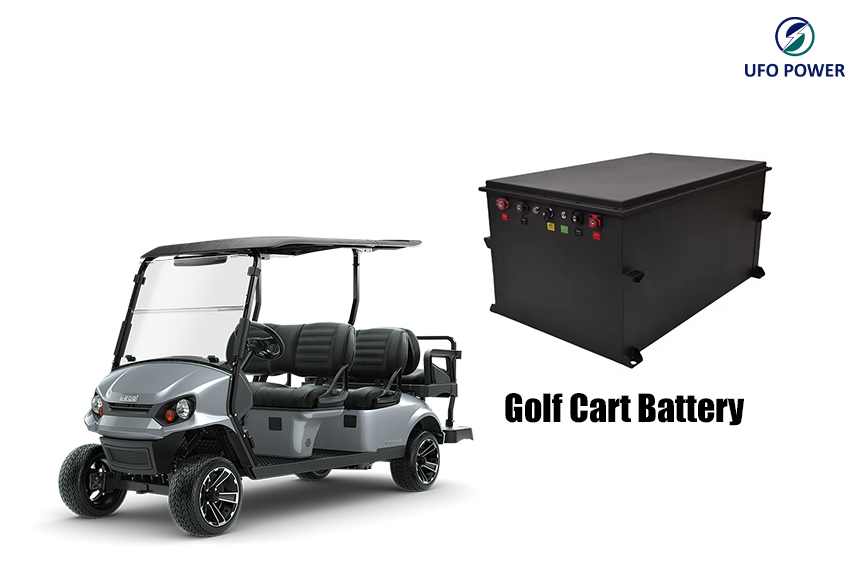
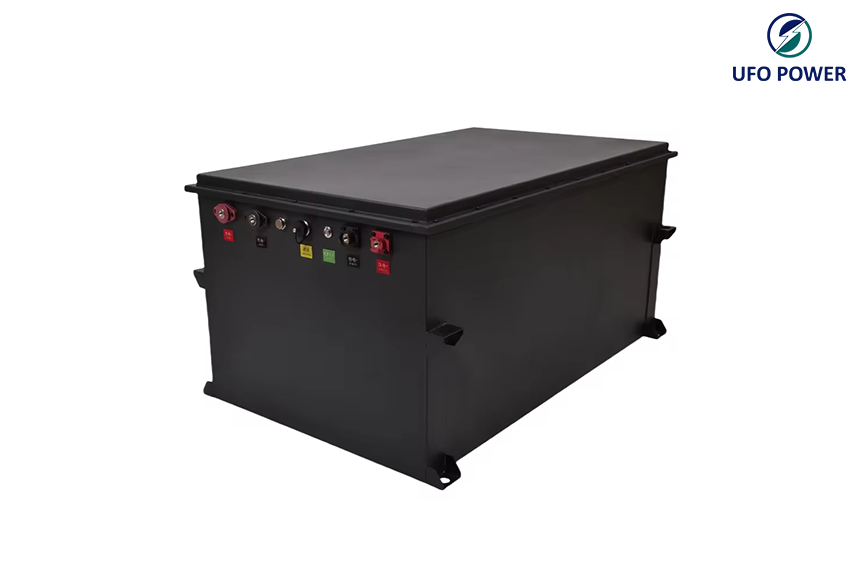
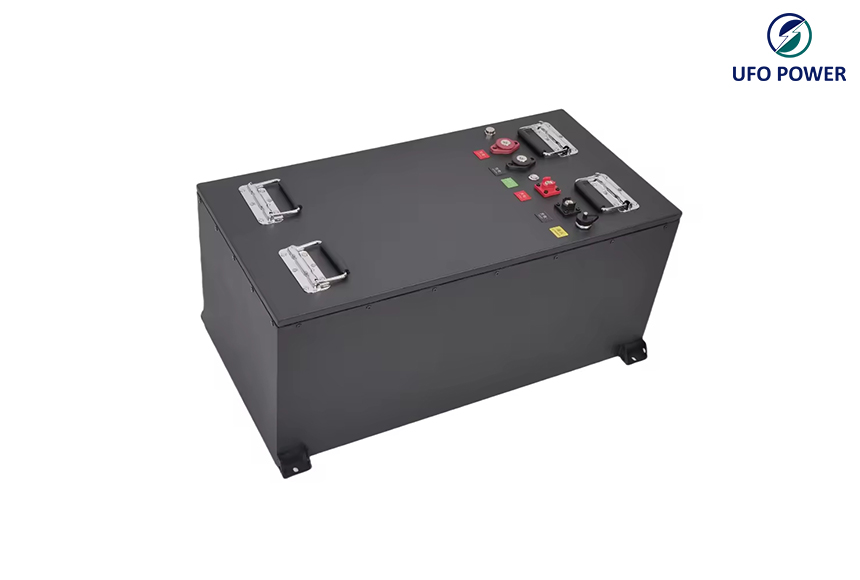
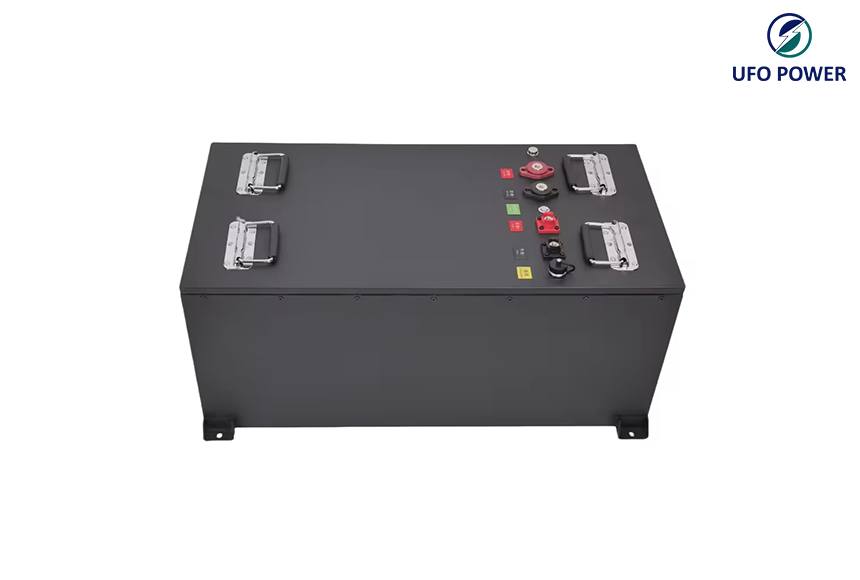
Two high-capacity configurations cover standard and extended shuttle routes.
| Model | Rated Voltage | Nominal Capacity | Nominal Energy | Configuration | Standard Cycle Life | Weight | Dimension (L×W×H) | Peak Current | Continuous Current | Waterproof |
|---|---|---|---|---|---|---|---|---|---|---|
| UFO51.2G160 | 51.2V | 160Ah | 8192Wh | 16S2P | 2000 | 69kg | 560×310×260mm | 500A (10s) | 210A | IP54 |
| UFO51.2G210 | 51.2V | 210Ah | 10752Wh | 16S2P | 3000 | 82kg | 760×250×260mm | 500A (10s) | 210A | IP54 |
Safety & Thermal Specifications
| Parameter | Specification |
|---|---|
| Cell Chemistry | LiFePO4 (LFP) – inherent thermal stability for passenger safety |
| Charging Temperature | 0 – 55°C |
| Discharge Temperature | -30 – 60°C |
| Storage Temperature | 0 – 45°C |
| Enclosure | SPCC with passenger-safe design |
| Communication | CANbus & RS485 available; GPS-integrated BMS reporting |
Key Features
The shuttle battery delivers high energy capacity (48V class, 160–210Ah) for all-day passenger routes, with robust thermal management that keeps performance stable during continuous operation in summer heat. LiFePO4 chemistry provides the inherent thermal stability and safety margin required for people-carrying applications, and passenger-safe battery enclosures protect occupants and equipment. A GPS-integrated BMS enables route-based energy optimization and automatic low-charge return-to-base alerts, so shuttles never strand passengers.
Applications
Built for resort and hotel shuttles, campus transport carts, theme park vehicles, and retirement community shuttles – applications that carry passengers over extended routes throughout the day and demand high capacity, thermal safety, and fleet-level reliability.
160–210Ah packs keep passenger routes running from morning to night without mid-day recharging.
51.2V / 160Ah (8192Wh) for standard shuttle routes
51.2V / 210Ah (10752Wh) for extended and heavy-use routes
500A peak current for loaded uphill starts
2–3 hour charging for overnight turnaround
People-carrying vehicles demand the safest chemistry and the most robust thermal design.
LiFePO4 chemistry with inherent thermal stability
Robust thermal management for continuous summer operation
Passenger-safe battery enclosure design
Discharge operation from -30°C to 60°C
The battery participates in fleet operations – optimizing energy and protecting passengers.
GPS-integrated BMS reporting for route-based energy optimization
Automatic low-charge return-to-base alerts
CANbus & RS485 communication for fleet dashboards
OEM/ODM customization of capacity, BMS, and enclosure design


 WhatsApp
 国家1
国家1 Home >