
 Sep 03, 2026
RV travel — with its freedom, adventure and closeness to nature — has become a lifestyle more and more people aspire to. Behind the comfort of every modern camper is a technology that is easy to overlook: the RV lithium battery. It is the heart of the caravan, delivering a steady stream of energy that makes long trips easier, freer and far less dependent on campsite hook-ups. As a professional lithium battery manufacturer, UFOPOWER explains what RV lithium batteries are, why they beat lead-acid, and the myths that still confuse many owners.

An RV lithium battery is an energy storage device that uses lithium-ion technology to power the electrical equipment and power systems of RVs and camping vehicles — from lighting and refrigeration to inverters, water pumps and entertainment systems. Today, the commonly used lithium batteries for RVs are 36V, 48V and 60V, and other voltages exist as well. Because different types of RVs are adapted to different voltages, currents, communication protocols and functional requirements, customisation has become the preferred choice for many manufacturers and owners.
Lightweight design. Lithium batteries are significantly lighter than traditional lead-acid batteries. They reduce the total weight of the RV, improve fuel efficiency and increase payload capacity.
Fast charging. Lithium batteries support fast charging, cutting waiting time at stops and making continuous, flexible driving easier.
Longer service life. Lithium batteries typically last much longer than lead-acid, reducing the frequency of battery replacement and overall maintenance costs.
High charging efficiency. Less energy is lost during charging, so owners get more usable power from the same charging source — whether solar, generator or shore power.
Smaller footprint. Lithium packs take up less space than lead-acid batteries, freeing valuable room in the RV for a more flexible and comfortable interior layout.
Despite their growing popularity, a few misconceptions still hold owners back. Here is the reality:
| Common misconception | The reality |
|---|---|
| "Lithium batteries are too expensive" | The purchase price is higher than lead-acid, but the service life is far longer. Over the life of one lithium battery you may replace lead-acid several times, so lithium saves more on maintenance and replacement in the long run. |
| "Lithium batteries might overheat or explode" | Quality RV lithium batteries are equipped with a Battery Management System (BMS) providing multiple protections — overcharge protection, over-discharge protection and overheating protection — for safe daily use. |
| "Lithium batteries need tedious maintenance" | The opposite is true. Compared with lead-acid, lithium caravan batteries require far less maintenance — there is no need to regularly check liquid levels or charging status. |
| "Lithium only suits long trips and camping" | Lithium caravan batteries deliver stable, efficient energy in all kinds of scenarios — long-distance travel, weekend camping, urban use and daily life. They are not limited to a specific travel mode. |
Put side by side, the differences between lithium and lead-acid quickly add up:
| Criteria | Lead-acid | RV lithium battery |
|---|---|---|
| Weight | Heavier | About 40% lighter |
| Size | Bulky — takes up valuable RV space | Much smaller — enables flexible layouts |
| Service life | Shorter — needs replacement more often | Much longer — far fewer replacements |
| Charging speed | Slower | Fast charging supported |
| Charging efficiency | Lower — more energy loss | Higher — less energy wasted |
| Maintenance | Periodic liquid-level and charging checks | Minimal — no regular liquid-level checks |
| Temperature performance | Narrower operating range | Wider range — stable voltage in cold, works in high heat |
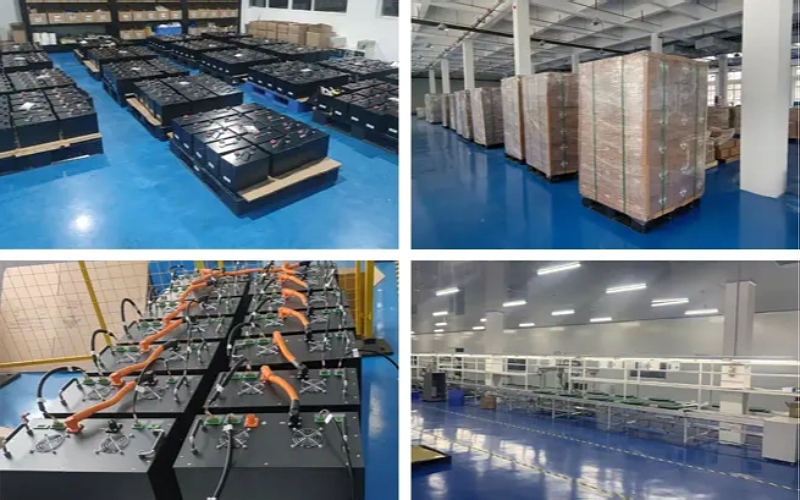
No two RVs are alike. A Class A motorhome, a van conversion and a towable trailer each have different voltage systems, current demands, available space and communication requirements — which is why off-the-shelf batteries rarely fit perfectly. As a professional lithium battery manufacturer with factory-direct OEM/ODM capabilities, UFOPOWER customises RV battery packs across voltage, current, capacity, size and communication parameters, tailoring the solution to your vehicle and how you actually travel. In-house production with strict quality control ensures every pack is built and 100% factory-tested before it ships.
Temperature performance deserves special attention for RV owners. Compared with lead-acid, lithium batteries perform better in cold weather: they have a wider operating temperature range and maintain a more stable voltage in low temperatures — while still operating reliably in high temperatures. Whether you camp in freezing mountain nights or desert summer heat, a properly specified lithium pack keeps the power flowing.
What voltage should my RV lithium battery be?
Why choose lithium over lead-acid for an RV?
Are RV lithium batteries safe?
Can I use an RV lithium battery in cold weather?
Can you customise RV batteries to my vehicle?
Do RV lithium batteries require much maintenance?


 WhatsApp
 国家1
国家1 Home >